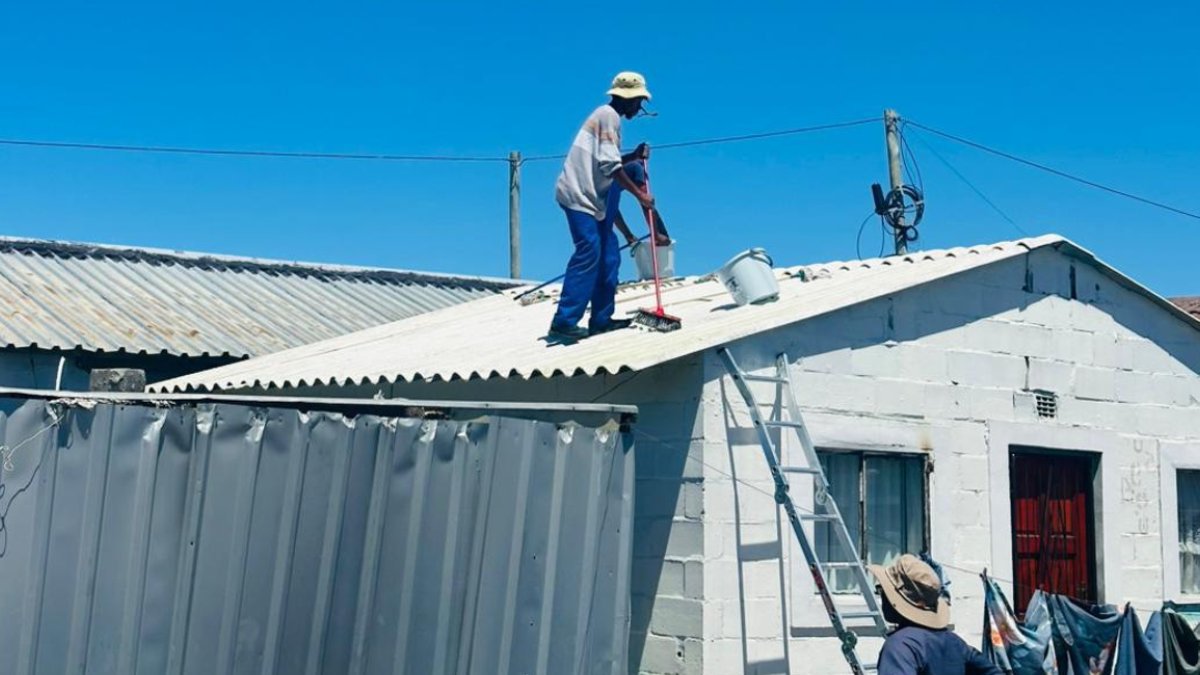
Scientists are testing whether a coat of white paint can help South Africans cope with rising temperatures and improve sleep as climate change intensifies. At the COP31 climate conference in Antalya, Türkiye, researchers highlighted that special reflective roof paint can lower indoor temperatures by 3 to 5 degrees during the hottest part of the day.
This experiment, which began in 2022, involves 240 households across Khayelitsha in Cape Town and Mphego village near Thohoyandou in Limpopo. The study aims to determine if a simple, affordable solution can protect vulnerable communities from the health risks of extreme heat. Rising nighttime temperatures are already reducing how long people sleep, particularly in poorer countries, according to a 2022 study that analysed more than seven million sleep records from 68 nations.
A cooler home, a better night’s sleep
The project focuses on informal dwellings, where corrugated-iron roofs absorb the sun’s heat. University of Cape Town epidemiologist Lara Dugas explained that these homes can reach temperatures as high as 30 degrees Celsius at night during summer. This heat disrupts the body’s ability to cool down, making it difficult to fall asleep and stay asleep. The research shows that for every degree Celsius the temperature rises, the quality of sleep drops significantly.
Participants in the study are waking up more often and struggling to reach restorative sleep cycles, which are essential for physical recovery and immune function. Bedroom temperature needs to be between 18°C and 22°C to get a good night’s sleep, although it varies between individuals. In shacks or informal housing, our measurements reveal it’s sometimes as high as 30°C at night during summer months, causing a significant drop in sleep quality.
Wealthier households can rely on air conditioning, but the 1.4-million South Africans living in informal settlements have few options. Dugas noted that painting a roof can make a home cooler almost immediately. “We paint someone’s roof today, and the next day the internal temperature of their house is down and they can sleep better,” she said. The paint, which costs around R2,500 per dwelling, reflects solar radiation instead of absorbing it.
This prevents the shack from warming up as much as an untreated roof would. The paint reflects solar radiation from the sun, preventing a shack from warming up as much as one without a painted roof would. It lowers temperatures by five to seven degrees during the middle, hottest part of the day, and shacks with painted roofs cool off very quickly at night.
South Africans love to sleep, often spending 11 hours in bed, but the quality of that rest is often poor. Dugas found that fragmented sleep caused by unsafe environments and high temperatures means people in Khayelitsha rarely reach deep restorative stages.
The study is not only testing the paint but also exploring other innovations, such as solar fans and ceiling installations, to further reduce indoor heat. The findings could reshape how researchers approach health problems in the face of a warming planet. The study found that people in Khayelitsha are in bed on average for 11 hours per night, but the quality of their sleep is terrible, and they are not reaching restorative sleep cycles.
Innovations beyond the paint
Partnerships with local authorities are helping to advance the project. The City of Cape Town has a heat resiliency programme. The researchers are sharing their data with the city. Discussions about formal partnerships are ongoing. The goal is to apply these findings to broader urban planning. The project began in 2022 and is expected to end in late 2027. So far, scientists have painted 120 roofs. This covers half of the 240 households involved in the trial.
The study tracks whether the painted roofs maintain their effectiveness over time. The work aims to provide a long-term strategy for heat management in vulnerable communities. The paint lasts between five and 10 years, and the project has been running for two years without having to repaint any of the homes. However, it is important to prepare roofs with rust with primers to ensure the paint lasts.
According to the 2025 Lancet Countdown report, South Africans experienced an average of 13 heatwave days in 2024. Climate change was responsible for about eight out of every 10 of those days, and regular sleep deprivation increases the risk of high blood pressure, diabetes, heart disease, and depression. The study measured sleep in five different populations, including Jamaica, the United States, Ghana, the Seychelles, and South Africa, using wrist-worn sleep monitors.
