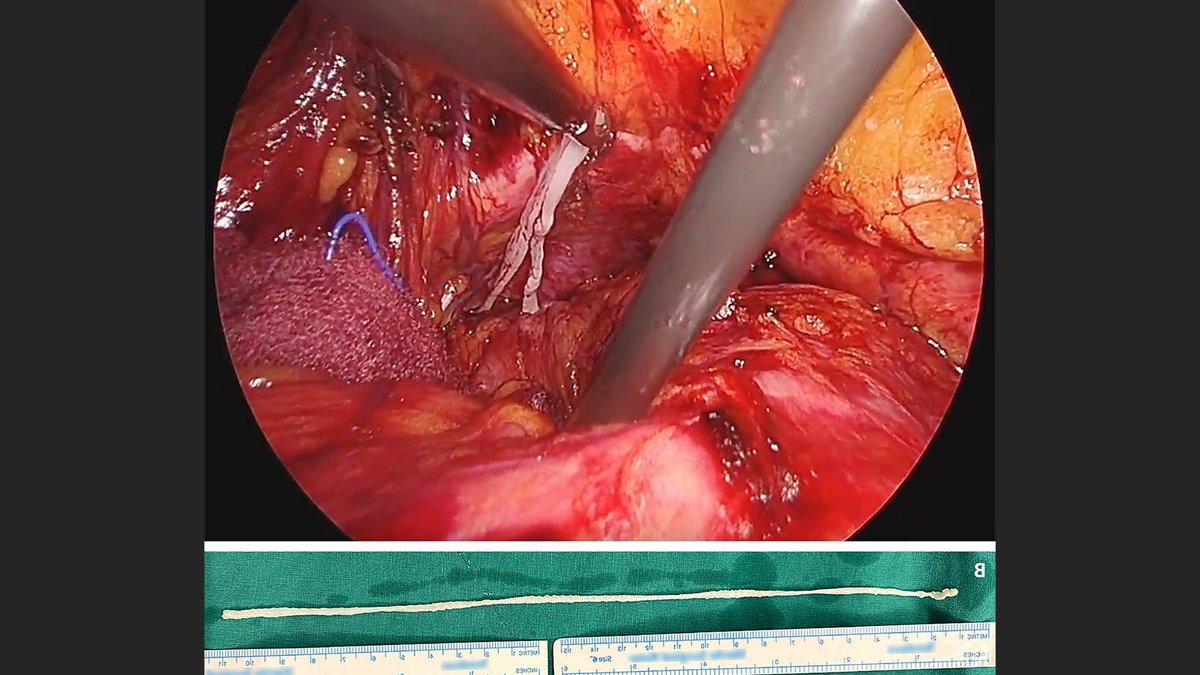
A 71-year-old man in South Korea underwent hernia surgery that revealed an unexpected 10-inch tapeworm in his peritoneal cavity, marking a remarkably rare medical discovery linked to a 50-year-old dietary habit that began during his military service. The patient had previously undergone surgery four years earlier for a left inguinal hernia, where a 7-inch tapeworm was also discovered incidentally. Despite these findings, he did not receive antiparasitic treatment after either procedure. The diagnosis of sparganosis was confirmed through a polymerase chain reaction (PCR) test. The test identified the worm as Spirometra erinaceieuropaei, a parasite typically contracted through consumption of undercooked snake or frog meat or water contaminated with infected crustaceans.
According to Chang-Seop Lee, MD, PhD, and Yeon Jun Jeong, MD, PhD, of Jeonbuk National University Medical School, the patient reported no symptoms prior to surgery beyond a painless groin bulge. Lab tests showed no eosinophilia, a blood marker often associated with parasitic infections. The patient’s condition remained undiagnosed for decades despite repeated surgical encounters with the parasite, which can persist silently in human tissue for extended periods without causing immediate harm.
Unique Longevity of Infection
The patient attributed his exposure to the parasite during military service approximately 50 years earlier, when he consumed raw snake meat believing it enhanced health and stamina. Sparganosis larvae can migrate through tissues and remain viable for decades, a phenomenon illustrated by this case. Upon receiving antiparasitic medication, he reported feeling well 45 days after his surgery. This prolonged survival without symptoms highlights the parasite’s ability to evade immune detection, a trait observed in only a minority of documented cases worldwide.
Bruce E. Hirsch, MD, of Northwell Health, noted that the condition is exceptionally uncommon, with only about 2,000 cases reported globally, primarily in Southeast Asia. The lifecycle of the parasite involves transmission from cats and dogs via contaminated water, which infects crustaceans, then frogs or snakes, before potentially reaching humans through ingestion. Hirsch explained that the parasite can also spread through frog tissue applied as wound poultices, a practice observed in some traditional medical treatments. Infection presentations range from weeks to decades post-exposure, with symptoms including painful nodules, bleeding, or, in 20% of cases, brain or central nervous system involvement.
Expert Insights
In this instance, the worm caused no harm, with Hirsch observing the peritoneal cavity appeared healthy and the parasite undulating unharmed on the surgical table. Research suggests tapeworms may sometimes coexist symbiotically with humans, potentially offering benefits against autoimmune conditions. The patient’s half-century survival without symptoms highlights biological nuances, Hirsch said. Thomas A. Moore, MD, of the University of Kansas School of Medicine-Wichita, emphasized that most cases are diagnosed retroactively after nodule removal, citing a 2015 case involving a Missouri man who ate undercooked frogs during a camping trip with his son’s friends.
In addition to eating infected critters or drinking water with hatchlings, sparganosis has been contracted by people who use frog tissue as poultices on wounds, Hirsch said. The infection can present clinically from weeks to decades after the initial exposure, he added. Often the infection presents as a nodule that can become tender and inflamed, may bleed, and may proliferate with different types of tapeworms. In about 20% of cases, that nodule occurs in the brain or central nervous system, which can be very dangerous and occasionally fatal, Hirsch said.
As for any clinical lesson, Jeong and Lee said sparganosis, while rare, should be included in the differential diagnosis for patients who have consumed raw reptiles or amphibians in endemic regions, which include North America and Southeast Asia. They also stressed that spargana may be discovered incidentally during unrelated surgeries and that [c]areful inspection of unexpected intraoperative findings and appropriate pathological or molecular confirmation are important for establishing the diagnosis.
