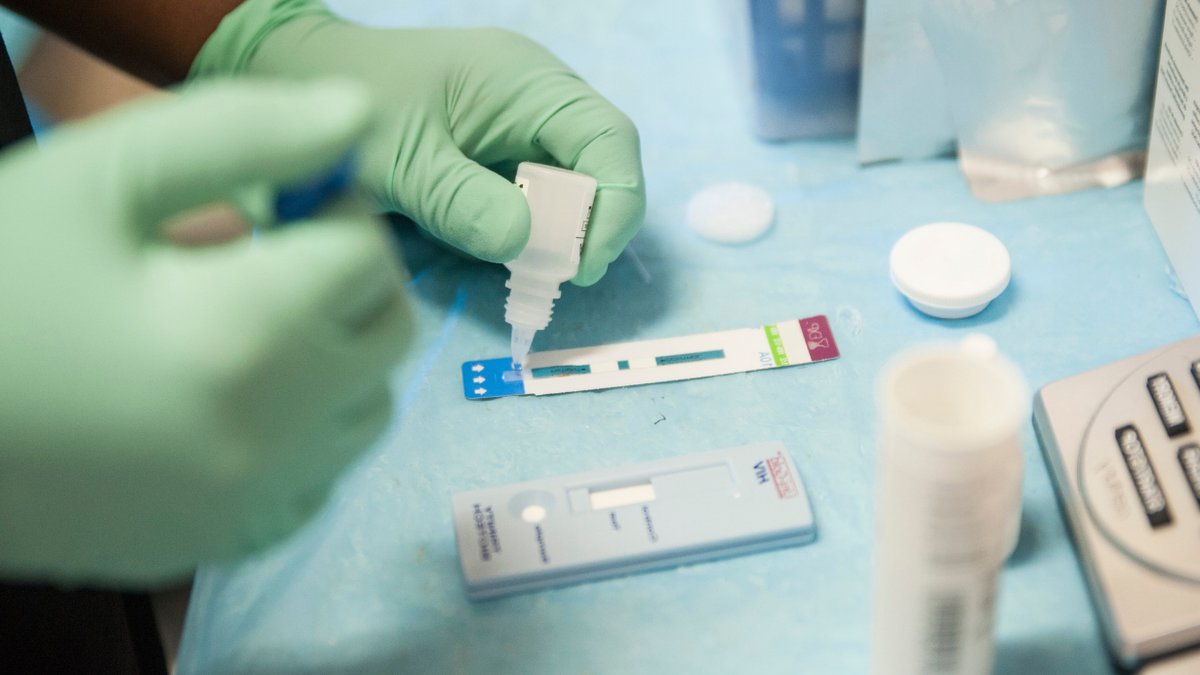
Researchers say findings from a large ongoing population survey tracking HIV in rural KwaZulu-Natal are a sobering warning. The survey, run by the Africa Health Research Institute, has been testing close to 30,000 people for HIV every year over 20 years. Four indicators analyzed in the study show that the momentum in bringing the HIV epidemic under control has been lost.
The study’s results are based on data from the uMkhanyakude district in KwaZulu-Natal, where high levels of HIV are prevalent. According to Frank Tanser, the senior author on the paper, studies like this provide a very sensitive finger on the pulse of the epidemic because they track an entire population over a long time, giving a true reflection of what’s happening in real life.
HIV Epidemic Trends
Researchers looked at four indicators in the study: the number of new infections, the ratio of incidence to prevalence, the lifetime chance of someone getting infected, and viral load. The findings suggest that progress towards getting the epidemic under control is faltering in KwaZulu-Natal, which is something experts say they should definitely be worried about.
The data shows that although the chance of someone getting HIV over their lifetime has declined among both men and women, it remains stubbornly high among women. Nationally, one in nine young people are likely to have had sex by the time they turn 15, which could mean a higher risk of HIV, especially for girls.
In 2004, the projected chance of a 15-year-old girl having HIV by age 55 was 75 out of 100. Two decades on, the prospect is not looking much better, with the projected chance sitting at 50 out of 100. This is worse than what boys’ future outlook was 10 years ago.
Incidence and Prevalence
The incidence-to-prevalence ratio is one way for researchers to track progress towards epidemic control. If the ratio is bigger than 1, the epidemic is growing. If the ratio is smaller than 1, the epidemic is shrinking. The data from this study shows that the ratio has been hovering around 1, suggesting that progress towards epidemic control has stalled.
Related Post: White Paint Test Helps South Africans Sleep Better
According to Mitchell Warren, head of the international HIV advocacy organisation Avac, the findings are in many ways an action agenda of what needs to be done to get back on track. Warren says that scaling up the roll-out of new prevention medicines like lenacapavir, a six-monthly injection, is essential to getting the epidemic under control.
Fifteen years ago, about four new infections were recorded among 100 women each year and about two among every 100 men. Then the rate dropped markedly, with incidence among men down to half of what it was before and about two-thirds in women by 2019. However, progress has since stalled, with the rates of new infections not dropping further.
Warren notes that staying still is not good enough and that there’s limited time to ensure that resources and programmes are not set back further, especially with Pepfar money being pulled out of South Africa from early next year. The stagnating incidence trend could be a worrying sign of what could happen in other areas with high HIV burdens.
The proportion of people with high viral loads has also increased, with at least 44% of people having more than 1,550 copies of the virus per millilitre of blood. This is roughly 30 percentage points away from the UN’s target of close to 86% of HIV-positive people on treatment having to be virally suppressed to end the HIV epidemic.
Warren concludes that to build on the success of the past, they have to be ambitious and they’ve got to be smarter and more strategic than the virus itself, and that means thinking differently about how they work with communities. He emphasizes the need to get smart about testing people and closing the treatment gap, and to build programmes not around an individual pathogen or disease, but around the individual person.
According to the report, the number of people with HIV in South Africa is estimated to be around 7.9 million, with just under 6.2 million of them on treatment. The health department also reports that around 2.43 million HIV-negative people had used HIV prevention medicine, or PrEP, since it became available in the public health sector. These numbers highlight the scale of the epidemic and the need for continued efforts to address it.
