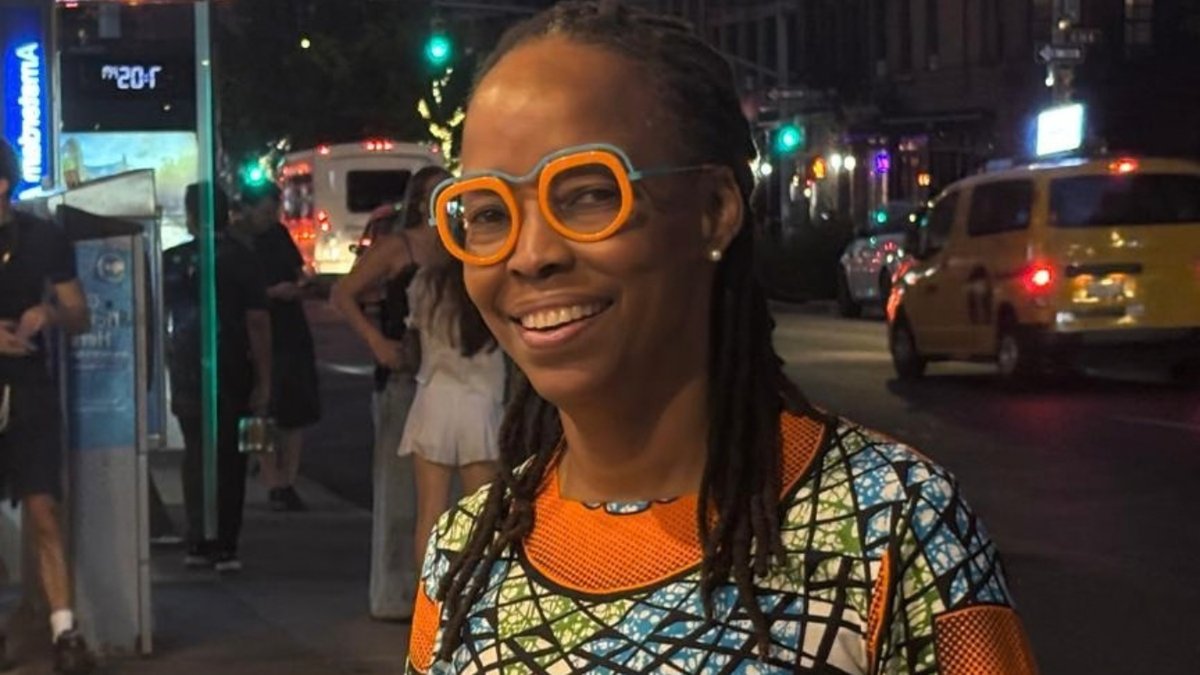
Last year, Kwanele Asante, a leading advocate for individuals with noncommunicable diseases and mental health issues, addressed the UN General Assembly, sharing her personal experiences. This moment marked the peak of her two-decade-long effort to ensure health systems prioritize the voices of those they aim to serve through their policies.
Asante’s journey began in a TB sanatorium in Soweto, where her parents met. She moved through six schools and a Bantustan education, later attending university in the United States and earning a master’s degree in medicine, focusing on bioethics and health law.
A breast cancer diagnosis at 37 transformed Asante into an activist. She founded BreastSens, an NGO that promotes health rights, human rights, and breast cancer education amongst indigent Black women in Soweto. Asante’s experience with breast cancer and subsequent health challenges, including chemotherapy-induced congestive heart failure and bipolar mood disorder, have informed her advocacy.
Asante has always rejected the designation “breast cancer survivor,” instead talking about her health in an all-encompassing way. She believes that people do not necessarily experience the health system as a series of separate diseases and specialist programs, but rather as a complex interplay of multiple ailments.
Asante’s life has been marked by significant changes, including a name change from Anne Molebatsi Pooe to Kwanele Asante-Shongwe in 2012.
Early Life and Education
Asante was born in Meadowlands in 1969. Her parents were divorced before she turned five, and she and her younger brother Lesele never saw their father again. Asante’s mother, Lerato Nokoane, was a teacher and later a prison officer, who worked to provide for her children.
Asante’s education was marked by instability, with her attending six schools before matriculating in 1987. She was taken in hand by the principal of Pelotona Middle School, ZK Mogodiri, who recognized her potential and helped her secure a place at a boarding school in Zeerust.
Related Post: Floods Linked to Mental Health Issues in Africa
Asante met her future husband, Isaac Shongwe, in 1989, and the couple moved to the United States, where Asante studied sociology and psychology at Wesleyan University. She later returned to South Africa and earned a law degree at Wits University, before pursuing a master’s degree in medicine.
In September last year, Asante’s journey took her to the United Nations General Assembly in New York, where she was chosen to deliver the lived-experience address at a global meeting on noncommunicable diseases and mental health. Then she came home and a wave of new health challenges washed over her, forcing a step back from activism.
Asante developed abdominal pain in her right side a few weeks later and was urgently admitted for surgery to remove an inflamed appendix. She was discharged 19 days later, in April, the month of her diagnosis with breast cancer 20 years ago.
Asante’s commitment to patient advocacy has also led her to serve on various committees and organizations, including the ministerial advisory committee on the prevention and control of cancer.
Advocacy and Critique
Asante has been a vocal critic of the global health advocacy system, arguing that it often prioritizes the interests of organizations over those of the communities they serve. She has written about the need for a more detailed and community-focused approach to healthcare, one that takes into account the complex social and economic factors that shape health outcomes.
Through her work, Asante has sought to amplify the voices of marginalized communities and to challenge the dominant narratives and power structures that shape healthcare policy and practice. Her own experiences as a patient and advocate have informed her critique of the health system, and she continues to push for greater accountability and transparency in healthcare policy and practice.
