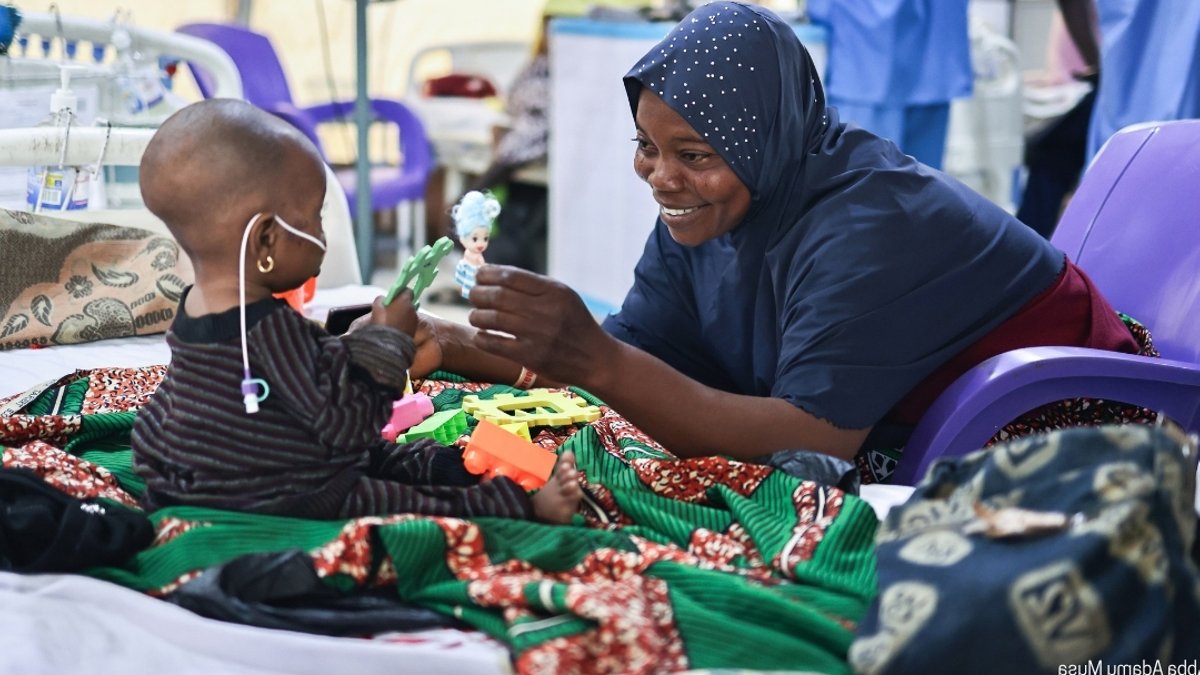
Caregivers of malnourished children often face the same severe health risks as the patients they tend to. Their emotional wellbeing directly impacts their ability to remain engaged in treatment and provide the necessary care for recovery.
Caregivers bear a heavy burden
The intensive care unit at the MSF Nilefa Kiji nutrition facility in Maiduguri, Nigeria, is filled with the sounds of sick children. Nurses move from bed to bed, dispensing therapeutic milk and checking vital signs. Every child here is fighting severe acute malnutrition, a condition that weakens immunity and often brings other diseases like measles and malaria.
While medical staff focus on the children, the stories of the caregivers rarely get told. Fatima Ibrahim spent three weeks in the facility with her 23-month-old daughter, who had battled meningitis. She felt grateful to see her daughter improve, but she could not stop thinking about the eight children she left behind at home.
“I am so worried about my children. Yesterday my older daughter had fever, and her father did not have money for medication. Yesterday, I cried and had no appetite,” Ibrahim said.
Latifat Abdulkareem brought her seven-month-old daughter to the same facility after she developed a fever, cough, and vomiting. The mother struggled to sleep during those first days, fearing the worst for her child.
“My daughter started having headache, fever and a cough, and started vomiting. I felt terrible. For days I couldn’t sleep. I even thought my daughter would not make it. When I brought her here, the nurses calmed me down. The counsellors come to play with my daughter, and we also have group sessions. The counsellors are very kind,” Abdulkareem said.
Supporting the people who support the children
To address these challenges, MSF integrates mental health and psychosocial support into its malnutrition programs. Caregivers receive psychological first aid upon arrival, followed by individual counseling and group sessions where they can share experiences and fears.
Children also participate in structured play activities designed to restore a sense of normalcy during recovery. In some cases, staff arrange supervised home visits so caregivers can briefly check on their families before returning to the facility to complete treatment.
Counselors also help caregivers reconnect with relatives when distress arises from a lack of contact. This approach recognizes that healing cannot be separated from the person caring for the patient.
Halima Mohammed spent 45 days moving between hospitals with two sick children. The constant stress took a toll on her own health.
Restoring hope through recovery
MSF staff note that caregivers often regain hope as they witness their children’s recovery. Some even return after discharge just to show how healthy their children have become.
“For us, those moments remind us that caring for the caregiver is also part of caring for the child,” said Kethurah John, an MSF counsellor educator.
It is also about restoring hope and resilience to the person who sits at the bedside every day. As the fight against malnutrition continues, the needs of children and those who care for them cannot be separated. Healing is not only about restoring a child’s weight.
