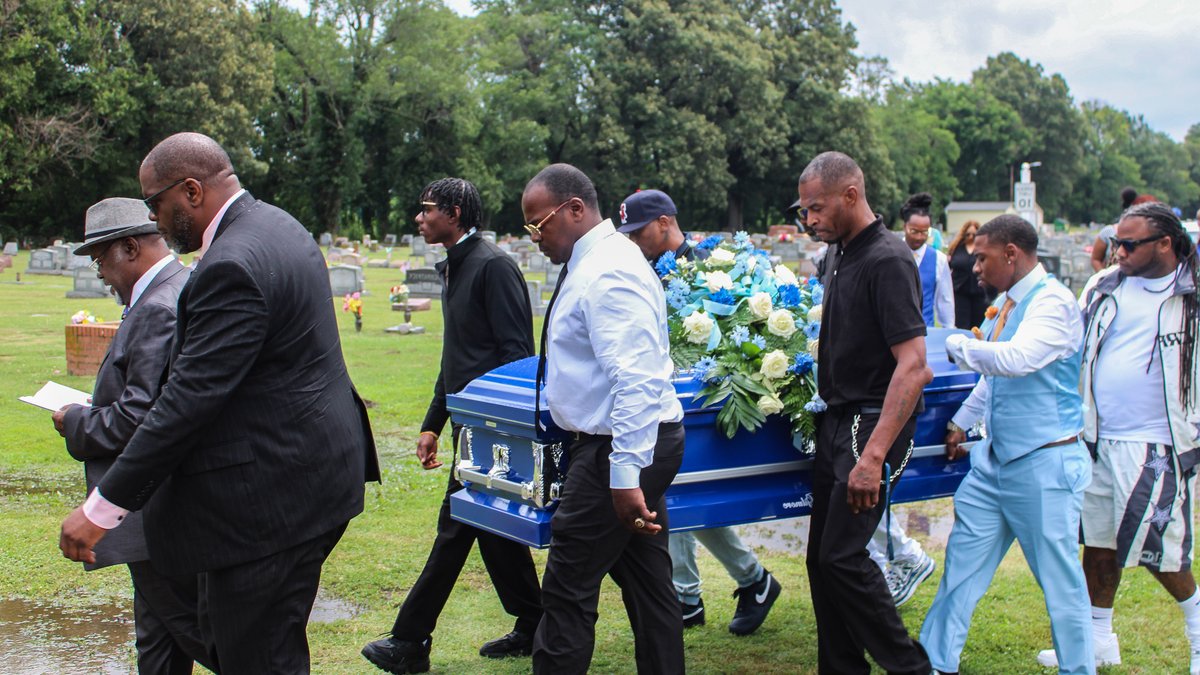
Hundreds of mourners gathered to honor Lloyd Gilmore, a 44-year-old Sikeston resident who died in police custody on June 10. At his funeral, his daughter Lania Gilmore told the church full of mourners to “stay woke” and “be there for your family and love on one another.”
Gilmore had approached an officer in the parking lot of the police station, speaking words the officer said he could not understand, according to a police report. Lania Gilmore said her dad, who had mental health issues, had asked her to call the police department and that he ran there seeking help.
A police report obtained through a public records request stated that during a physical altercation involving seven Sikeston police officers, Gilmore was shocked with a Taser and put into hobble restraints. Two autopsies were performed, but the results, including Gilmore’s cause of death, had not been released as of mid-July.
Some Black Sikeston residents are concerned about racial bias within the city’s police department. Mark Wiggins, president of Sikeston’s NAACP branch, said, “We need the police. We just need them to do their jobs correctly and leave Black people alone.”
Wiggins grew up in the city, which has a history of racial violence.
Related: Mushrooms Boost Immune System with Beta Glucans
Mark Wiggins, president of the local NAACP branch, sits outside his Sikeston, Missouri, home. Wiggins grew up in the city. After Lloyd Gilmore died in police custody on June 10, Wiggins protested alongside other residents and civil rights activists.
But despite worldwide protests in 2020 in the wake of high-profile police-involved killings of Black people, the public paid little attention when a prestigious group released a report last year about deaths in custody, said Roger Mitchell Jr., a forensic pathologist finishing his term as president of the National Medical Association, which represents African American physicians.
During a City Council meeting, Lania Gilmore pleaded with the city to release more information about her father’s case. Other residents wanted to know why the officers involved were not placed on administrative leave immediately after Gilmore died.
McMillen said his officers are trained, but many communities have created specialized non-law enforcement teams to assist people in crisis. Sikeston Mayor Greg Turnbow, who is white, said at the meeting, “Chief does not want anybody to be mistreated at all. Period.”
The day Gilmore died, his daughter said, he had been anxious and was looking for a safe space. So, she said, he had spent much of the day watching her braid hair at the salon where she works, then he went with her to her eyelash extension appointment.
Related: What Are Few Benefits of Using Afatinib For Hair Loss?
Lania Gilmore said police told her that her father overdosed, but she said she doesn’t understand how that would have been possible, given the short time between when he left her and an ambulance was called. The city’s police force knew Gilmore had mental health issues, his daughter said.
After Gilmore died, Louis Houston, a longtime Sikeston resident, said he decided to move 30 minutes outside the city to a neighboring community, where he feels safer. He said hearing about other Black Sikeston residents being harassed by the police department had started to affect his mental health.
Houston’s already thinking about the conversations he will have with his young children about how to respond if they ever interact with a police officer. He has a script in mind: “Be careful,” Houston plans to tell them. “They can help you, but they also can kill you.”
It’s clear that the issue of police brutality and racial bias is still a major concern in Sikeston. The fact that Gilmore’s death is still under investigation, and the results of the autopsies have not been released, has only added to the sense of uncertainty and mistrust in the community.
